
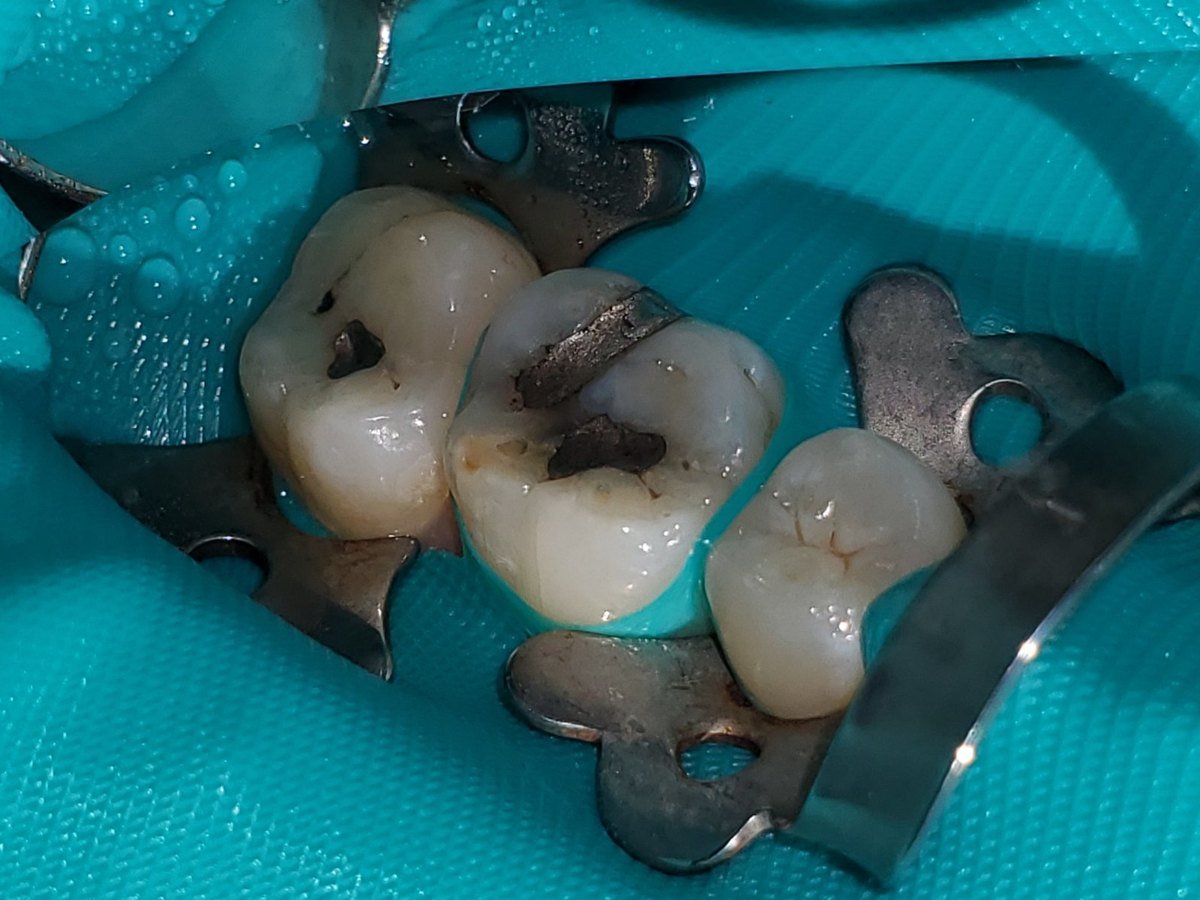
Silver-colored fillings, dental amalgam, are about half mercury by weight. As long as they sit undisturbed, they release small amounts of mercury vapor, more with chewing, grinding, and hot drinks. The moment a dentist drills one out, that release spikes. That’s the reason SMART protocol amalgam removal exists: to reduce how much mercury vapor and particulate you, the dental team, and the environment are exposed to during the procedure.
Mercury safety and the Institute for Functional Medicine’s amalgam removal protocol were both part of my integrative training through the American College of Integrative Medicine and Dentistry (ACIMD). Below I’ll walk through what the protocol involves, why each step matters, and what is evidence-based versus optional.
Key takeaways
- SMART stands for Safe Mercury Amalgam Removal Technique, a set of recommendations developed by the International Academy of Oral Medicine and Toxicology (IAOMT).
- Drilling amalgam creates fine particles that keep releasing mercury vapor. In one study, vapor peaks exceeded occupational ceiling limits in 9 of 21 removals even with protective measures in place.
- The core of SMART is physical: isolation with a dental dam, a separate air supply for you, powerful suction at the mouth, and removing the filling in chunks rather than grinding it to dust.
- Pre- and post-removal supplements are widely recommended in integrative circles, but the evidence for them is limited.
Why Removing Amalgam Needs Precautions
A 2019 study measured mercury vapor released from the particles generated when dentists removed amalgam fillings with a high-speed drill. Even with a rubber dam, high-volume suction, and secondary air evacuation in use, the average peak vapor level from those particles was about 195 micrograms per cubic meter. In 9 of 21 samples, peaks exceeded the U.S. NIOSH ceiling of 100 µg/m³, and an hour later, 17 of the 21 samples were still releasing vapor above 10 µg/m³. The authors recommended skin and inhalation protection for dental staff and careful disposal of contaminated materials.

The U.S. Food and Drug Administration acknowledges the same basic fact from the other direction: in 2020 it advised against placing amalgam in high-risk groups when appropriate alternatives exist, and also advised against removing amalgam fillings that are in good condition unless there is a medical reason, partly because removal temporarily increases mercury exposure. If removal is necessary or chosen, it should be done carefully.
SMART Protocol Amalgam Removal: The Core Elements
The IAOMT publishes its SMART recommendations and offers SMART certification for dentists who complete its training. The core elements include:

Protection for you
- Dental dam (rubber dam), preferably non-latex, to isolate the tooth and keep debris out of your mouth and throat, with a saliva ejector placed underneath the dam
- A separate air supply through a nasal mask or cannula, so you’re breathing clean air or oxygen rather than air from around your mouth
- Full-body and head coverage with an impermeable drape, plus eye protection
- Extraoral high-volume suction, a large vacuum positioned a few inches from your mouth to capture vapor and aerosol at the source
- Sectioning the filling into large chunks and lifting them out, instead of grinding the whole filling away
- Copious water spray and high-volume suction to keep the filling cool and capture debris
- A thorough rinse after the amalgam is removed

Some offices also offer a pre-procedure rinse or slurry of activated charcoal or chlorella, which the IAOMT lists as optional.
Protection for the dental team
- Properly fitted respirators rated for mercury, or positive-pressure air supplies
- Protective gowns and head coverings, removed and handled carefully after the procedure
Protection for the environment
- An amalgam separator on the office’s suction system, which the U.S. EPA has required for most dental offices that remove amalgam since its 2017 rule (existing offices had to comply by July 2020)
- Room air filtration designed to capture mercury vapor, and proper disposal of contaminated materials
What a SMART Appointment Feels Like
From the patient’s chair, a SMART visit looks more involved than a routine filling. You’ll be draped, fitted with a nasal air mask, and the dam will be placed before anything is drilled. Many offices work on one area of the mouth per visit. After the amalgam is out, the tooth is cleaned, and the new restoration, usually a composite, ceramic, or glass ionomer, is placed or a temporary is made for a crown or onlay.


Visits take longer and usually cost more than standard filling replacement because of the time and equipment involved. Ask for an itemized estimate so you know exactly what you’re paying for.

What About Supplements and “Detox”?
You’ll find many protocols recommending vitamin C, glutathione or N-acetylcysteine, selenium, chlorella, activated charcoal, or IV nutrients around amalgam removal. The idea is to bind swallowed mercury or support the body’s own processing of it. Here’s my honest take:
- These recommendations are based on biochemistry and clinical experience, not on controlled trials showing better outcomes after amalgam removal.
- Most are low-risk at moderate doses for healthy adults, but they aren’t risk-free. Activated charcoal can interfere with medications, and high-dose supplements can interact with prescriptions.
- The best-documented way to reduce your exposure is the physical protection during the procedure itself.
In my view, a balanced diet with plenty of vegetables and protein, good hydration, and rest after the appointment are sensible. Anything beyond that should be discussed with your physician, especially if you take medications or have kidney disease. I’d be cautious about any program that requires expensive IV chelation as part of routine amalgam removal.
Who Should Wait
Most biological dentists, myself included, recommend deferring elective amalgam removal during pregnancy and breastfeeding, because removal itself temporarily raises exposure. If a filling is broken, decayed, or causing problems during pregnancy, that’s a different conversation with your dentist and obstetrician.
Whether you should remove your amalgam fillings at all is a separate question. I cover how to decide in should you remove your amalgam fillings? and how to choose replacement materials in dental material biocompatibility testing.
Questions to Ask Before Amalgam Removal
- Do you follow the IAOMT SMART recommendations, and are you SMART-certified?
- Will I have a dental dam, a nasal air supply, and an extraoral suction unit for every removal?
- Do you section fillings and remove them in pieces?
- What will replace my fillings, and why that material?
- How many teeth will you treat per visit, and what will each visit cost?
A good office will answer these without hesitation. Note that IAOMT certification tells you a dentist has completed training; it doesn’t guarantee how carefully each procedure is done, so the answers to these questions still matter.
Frequently Asked Questions
What does SMART stand for in dentistry?
SMART stands for Safe Mercury Amalgam Removal Technique. It’s a set of recommendations from the International Academy of Oral Medicine and Toxicology to reduce mercury exposure for patients, dental staff, and the environment when amalgam fillings are removed.
Do I need a SMART-certified dentist to remove amalgam?
It isn’t legally required, but it’s a sensible choice if you’re having amalgam removed. What matters most is that the dentist actually uses the protective steps: a dental dam, a separate air supply for you, extraoral suction, and sectioning the filling. Ask about each one.
Should I detox after amalgam removal?
There’s little research showing that supplements or detox programs improve outcomes after amalgam removal. Good protection during the procedure is what reduces exposure most. If you’re considering supplements or chelation, discuss them with your physician first, particularly if you take medications.
Can I have amalgam fillings removed while pregnant or breastfeeding?
Elective removal is generally postponed during pregnancy and breastfeeding because removal temporarily increases mercury exposure. If a filling is broken or decayed, your dentist and obstetrician can decide together on the safest way to manage it.
How many amalgam fillings can be removed at one visit?
It depends on the size and location of the fillings and your comfort. Many dentists treat one area of the mouth, such as a quadrant, per visit. Your dentist should explain the sequence and spacing of appointments before you start.
Bottom Line
The SMART protocol isn’t a gimmick. It’s a practical response to a measurable problem: removing amalgam releases mercury vapor and particles. The steps that matter most are physical, isolating the tooth, giving you a separate air supply, capturing vapor at the source, and removing the filling in chunks. If you’ve decided to replace your amalgam fillings, insist on those protections.
References
- Warwick D, Young M, Palmer J, Ermel RW. Mercury vapor volatilization from particulate generated from dental amalgam removal with a high-speed dental drill — a significant source of exposure. Journal of Occupational Medicine and Toxicology. 2019;14:22.
- International Academy of Oral Medicine and Toxicology. The SMART Choice: Safe Mercury Amalgam Removal Technique.
- U.S. Food and Drug Administration. Recommendations about the use of dental amalgam in certain high-risk groups. September 2020.
- U.S. Environmental Protection Agency. Effluent limitations guidelines and standards for the dental category. Federal Register. June 14, 2017.
- UN Environment Programme. Minamata Convention COP-6 agrees to end use of dental amalgam by 2034. November 2025.
About the Author

Dr. Gyu Hwang, DDS, practices at Evergreen Dental Wellness in Annandale, Virginia. He has treated patients since 2004, beginning with his clinical training at the University of Michigan School of Dentistry (DDS, 2006). His postgraduate training includes the Pankey Institute, the Dawson Academy, the Kois Center, and biological and integrative dentistry through the American College of Integrative Medicine and Dentistry (ACIMD). His practice focuses on biological dentistry, implants, laser dentistry, and sleep appliances. Read more about Dr. Hwang.
This article is for education and does not replace an in-person dental evaluation.