
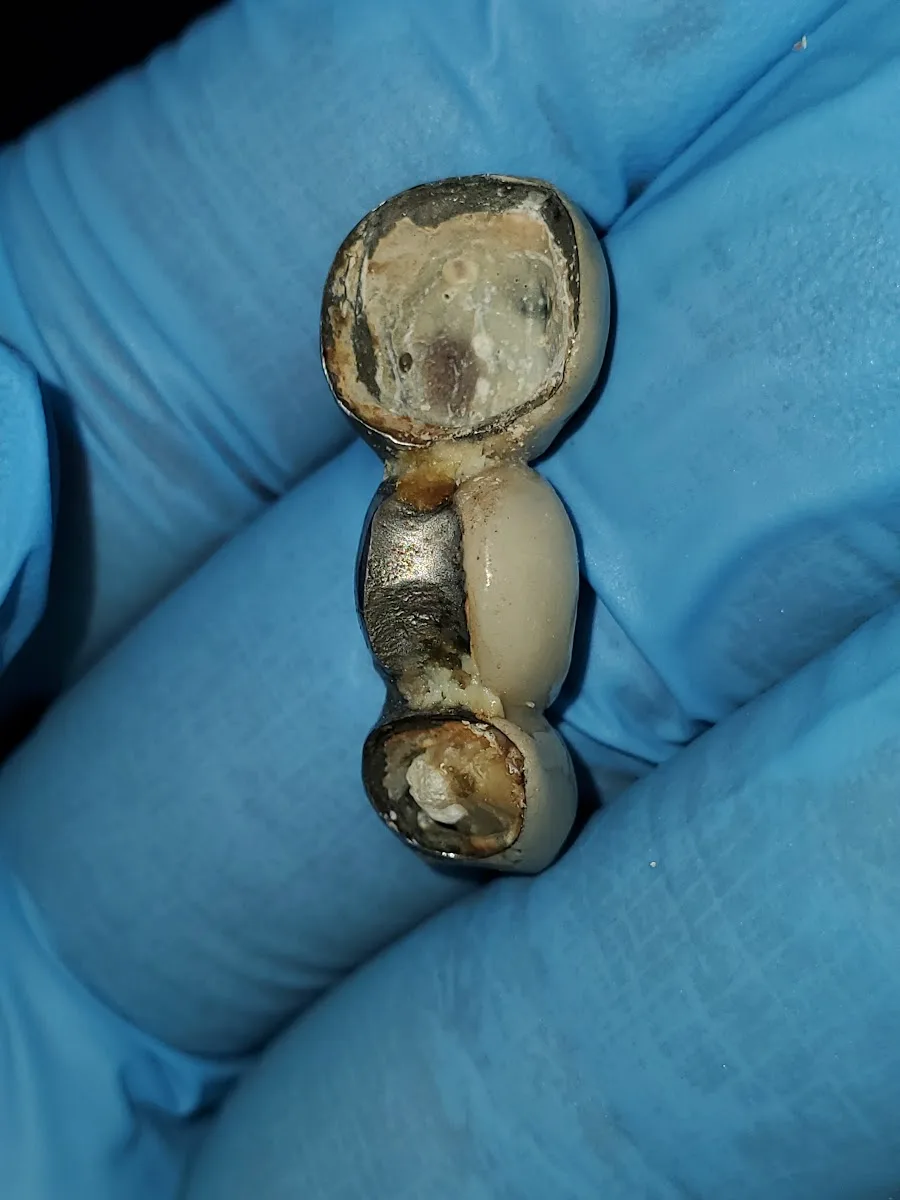
“How do I know my body won’t react to this material?” It’s a fair question, especially for people with metal allergies, autoimmune conditions, or a history of reacting to dental work. Dental material biocompatibility testing promises an answer, but the tests on offer range from well-established to unvalidated. Choosing the right one matters as much as choosing the right material.
In my integrative training through the American College of Integrative Medicine and Dentistry (ACIMD), I studied several of these methods, including a full lecture on electrodermal (EAV) dental testing. Below is my honest comparison.
Key takeaways
- Most people don’t need testing. A careful history of allergies and reactions guides material choice for the majority of patients.
- Patch testing, done by a dermatologist or allergist, is the established test for delayed-type contact allergies to metals and resin components.
- Serum compatibility tests rank dental products by immune reactivity in your blood. We use the Biocomp Laboratories serum test for patients who want one, though serum tests in general have little independent validation.
- Lymphocyte tests like MELISA give inconsistent results, especially for titanium, and MELISA isn’t currently available through the labs we use. Electrodermal (EAV) and muscle testing are used by many integrative practitioners, including in our practice, as complementary tools. Research is still limited, so we use them alongside a careful history and lab or patch testing rather than on their own.
Why Biocompatibility Matters
Every dental material interacts with your body to some degree. Most interactions are harmless, but some people develop true allergic reactions, usually delayed (type IV) contact allergies to metals such as nickel, cobalt, chromium, palladium, or gold, or to resin components such as methacrylates. Reactions can show up as burning, redness, lichen-like patches next to a restoration, or, rarely, skin reactions elsewhere.

There’s also a broader concern among biological dentists: limiting the number of different metals in the mouth and choosing materials that release as little as possible over time. That reasoning is part of why ceramics like zirconia and lithium disilicate are popular in biological practices.
Step One: A Good History
Before any test, I ask:

- Have you reacted to jewelry, belt buckles, watch backs, or piercings? (Nickel allergy is one of the most common contact allergies.)
- Have you reacted to dental work, cosmetics, hair dye, or acrylic nails? (Methacrylates are shared ingredients.)
- Do you have an autoimmune or allergic condition, or a history of multiple chemical sensitivities?
- Have you had a reaction near an existing filling, crown, partial denture, or orthodontic wire?
For most patients, the answers point to sensible material choices without any testing at all.
Dental Material Biocompatibility Testing: The Main Options
| Test | What it measures | Strengths | Limitations |
|---|---|---|---|
| Patch test (epicutaneous) | Delayed skin reaction to small amounts of specific allergens | Established standard for contact allergy; dental series available | Requires a dermatologist or allergist; skin results don’t always match the mouth; not reliable for pure titanium |
| Serum compatibility testing | Immune reactivity in a blood sample to chemical groups in dental products, producing a ranked product list | Convenient (a single blood draw); tailored lists of products; this is the blood test we offer (Biocomp Laboratories) | Proprietary methods; little independent, peer-reviewed validation of predictive value |
| MELISA / lymphocyte transformation test | Whether your white blood cells multiply when exposed to metals in the lab | Measures a real immune response | Inconsistent reliability and validity in reviews; expensive; questionable for titanium; not currently available through the labs we use |
| Electrodermal (EAV) or muscle testing | Changes in skin conductance or muscle strength when exposed to a material | Quick, non-invasive; widely used in integrative practice | Limited research; not yet validated in controlled studies |
Patch testing
If a true allergy is suspected, patch testing is where I start. A dermatologist applies small amounts of standardized allergens to the skin of your back and reads the reactions after a few days. Dental series include common metals, methacrylates, and other components. It’s not perfect, since the mouth and skin don’t always react the same way, but it’s the best-validated tool we have for delayed contact allergy.
Serum compatibility testing
Several labs offer blood tests that report how strongly your serum reacts to the chemical groups found in brand-name dental products, then rank those products as more or less compatible for you. Many biological dentists use these tests, and some patients find the ranked list reassuring.
The serum test we use: Biocomp Laboratories
For patients who want a blood test, we use the Serum Biocompatibility Test from Biocomp Laboratories, a lab created by Dr. Hal Huggins. Here’s how it works:
- Get a kit. You receive a test kit from our office, or you can order one directly from Biocomp.
- Have your blood drawn. A local clinical lab or blood draw location collects the sample, prepares the serum, and ships it to Biocomp.
- The lab tests your serum for immune reactivity to the components of dental materials in three groups: metals (amalgam and casting alloys), composite resins, and porcelain and ceramic materials.
- We review the report together. Biocomp sorts the products into highly reactive, moderately reactive, and least reactive, and sends the report directly to your dentist or physician. We then choose your materials from the least reactive group whenever it makes clinical sense.
My honest assessment: the lab’s methods are proprietary, and I haven’t seen independent studies showing that choosing materials this way leads to fewer reactions or better outcomes. I find it most useful for highly sensitive patients who want extra reassurance, alongside a careful history and, when a true allergy is suspected, patch testing.
MELISA and other lymphocyte tests
These tests expose your white blood cells to metals in the lab and measure whether they proliferate. A 2022 systematic review of tests for titanium hypersensitivity found that patch tests, MELISA, and lymphocyte transformation tests all gave inconsistent results in terms of reliability and validity. The authors advised against using them to diagnose intolerance to pure titanium implants, noting that true allergy to pure titanium is unlikely and that problems are more often an inflammatory reaction to particles. They suggested patch testing may still help when other metals in an alloy or crown are suspected.
Despite the similar name, MELISA (memory lymphocyte immunostimulation assay) is not an ELISA antibody test. It’s a modified lymphocyte transformation test that measures how your white blood cells respond to metals. MELISA testing also isn’t currently available through the labs we use, which is one reason we rely on serum testing when a patient wants a blood test.
Electrodermal (EAV) and muscle testing
Electrodermal testing measures skin conductance at acupuncture points while a material is introduced into the circuit; muscle testing checks for changes in muscle strength. Many integrative and functional medicine practitioners find these tools helpful, and I’m adding muscle testing to my own practice as a complementary tool. Research is still limited: these methods haven’t yet been validated in controlled studies, and well-designed research on muscle testing for dental materials would be valuable. In my practice, these tests add information but never replace the history, patch testing, or serum testing.
Choosing Materials Without Over-Testing
For patients who want a biocompatible-first approach, these choices cover most situations:

- Fillings: composite resin for most small and medium restorations, with a rubber dam and a final rinse after placement; glass ionomer in some situations. Concerns about BPA from composites are understandable; research suggests exposure is very low and brief, concentrated right after placement.
- Crowns and onlays: zirconia or lithium disilicate ceramics, which are metal-free and rarely associated with allergic reactions
- Implants: titanium has a long track record; zirconia (ceramic) implants are an option for patients who want metal-free treatment or have a documented reaction to an alloy
- Avoid when possible: base-metal alloys containing nickel or cobalt in patients with known sensitivities, and mixing many different metals in one mouth
Frequently Asked Questions
Do I need biocompatibility testing before dental work?
Most people don’t. A careful history of allergies and reactions is enough to choose suitable materials for the majority of patients. Testing makes most sense if you’ve had reactions to metals, dental materials, or cosmetics, or if you have a condition that makes you especially cautious.
What is the most biocompatible filling material?
There’s no single best material for everyone. Composite resin and ceramic restorations are metal-free and work well for most people, and glass ionomer is useful in specific situations. If you have a known allergy, patch testing can identify components to avoid.
Can I be allergic to titanium implants?
True allergy to pure titanium appears to be rare, and current tests aren’t reliable for diagnosing it. Some patients have inflammatory reactions to titanium particles, and alloys or crowns may contain other metals that cause allergy. Zirconia implants are a metal-free alternative.
Are serum compatibility tests accurate?
They measure immune reactivity in a blood sample and produce a ranked list of products, but their methods are proprietary and there’s little independent research showing they predict reactions in the mouth. They can be an optional tool for very sensitive patients. In our office, we use the serum test from Biocomp Laboratories.
How does the Biocomp serum biocompatibility test work?
You get a kit from our office or directly from Biocomp Laboratories, and a local lab draws your blood and sends the serum to Biocomp. The lab tests its reactivity to metals, composite resins, and porcelain and ceramic materials, then reports products as highly, moderately, or least reactive. The report goes to your dentist, and we choose materials from the least reactive group when possible.
Is MELISA the same as an ELISA test?
No. Despite the similar name, MELISA is a lymphocyte transformation test that measures how white blood cells respond to metals, not an ELISA antibody test. Reviews have found its results inconsistent, especially for titanium, and it isn’t currently available through the labs we use.
Is EAV or muscle testing reliable for choosing dental materials?
They haven’t yet been validated in controlled studies, so they’re best used as a complementary tool. Many integrative practitioners use them, and I use them alongside a careful history and patch or serum testing, not as the only basis for choosing materials.
Bottom Line
Biocompatibility matters, but testing isn’t one-size-fits-all. Start with a thorough history, use patch testing when a real allergy is suspected, treat serum testing as optional, be skeptical of lymphocyte tests for titanium, and use energy-based testing, if you choose it, as a complement to these steps rather than a replacement. Then choose metal-free, well-studied materials wherever they make clinical sense.
References
- Müller-Heupt LK, et al. Diagnostic tests for titanium hypersensitivity in implant dentistry: a systematic review of the literature. International Journal of Implant Dentistry. 2022;8:29.
- Lewith GT, et al. Is electrodermal testing as effective as skin prick tests for diagnosing allergies? A double blind, randomised block design study. BMJ. 2001;322:131.
- Fleisch AF, et al. Bisphenol A and related compounds in dental materials. Pediatrics. 2010;126(4):760-768.
- Biocomp Laboratories. Serum Biocompatibility Testing. Accessed November 2026.
About the Author

Dr. Gyu Hwang, DDS, practices at Evergreen Dental Wellness in Annandale, Virginia. He has treated patients since 2004, beginning with his clinical training at the University of Michigan School of Dentistry (DDS, 2006). His postgraduate training includes the Pankey Institute, the Dawson Academy, the Kois Center, and biological and integrative dentistry through the American College of Integrative Medicine and Dentistry (ACIMD). His practice focuses on biological dentistry, implants, laser dentistry, and sleep appliances. Read more about Dr. Hwang.
This article is for education and does not replace an in-person evaluation.