
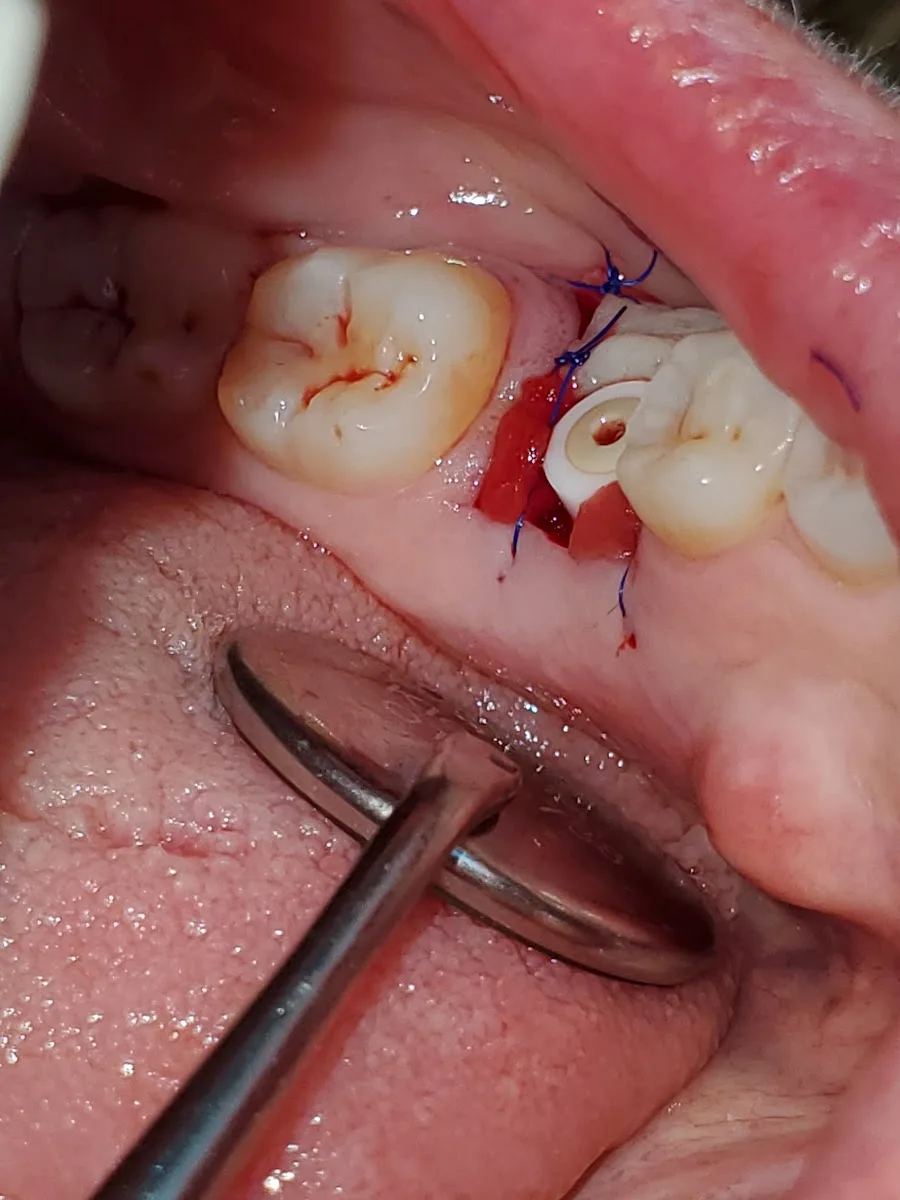
Most people think of an extraction as the end of a tooth’s story. In biological dentistry, it’s the beginning of the next chapter: healing the bone and gums, and often preparing the site for an implant. A biological tooth extraction focuses on removing the tooth with as little trauma as possible, cleaning out infection thoroughly, and using your body’s own healing tools to support recovery.
Biologically oriented oral surgery and exodontia were covered in my integrative training through the American College of Integrative Medicine and Dentistry (ACIMD). Here’s what the approach involves and what the evidence says about each piece.
Key takeaways
- Gentle techniques such as the Ögram method loosen the tooth slowly instead of forcing it out, which protects the bone and gum around the socket.
- The goals are to preserve bone, remove all infected tissue from the socket, protect the blood clot, and plan for what replaces the tooth.
- Platelet-rich fibrin (PRF), made from a small sample of your own blood, may reduce dry socket and early pain after wisdom tooth removal, though the evidence quality is low.
- Ridge preservation grafting reduces bone shrinkage after extraction when an implant is planned.
- Antibiotics modestly reduce infection after wisdom tooth surgery but aren’t needed routinely for healthy patients and simple extractions.
What Makes an Extraction “Biological”?
1. Gentle, bone-preserving removal
Teeth are held in place by a ligament. Rather than levering a tooth out forcefully, which can fracture the thin bone around it, a careful surgeon uses fine instruments called periotomes, sections multi-rooted teeth, and sometimes uses piezoelectric (ultrasonic) surgery to separate the tooth from the bone. Preserving that bone, especially the thin outer wall, makes future implant placement simpler and more predictable.
The Ögram technique
In my practice, I use the Ögram (ÖGRAM) technique, a gentle extraction method developed in Germany. Instead of rocking or prying the tooth out, special Ögram instruments first separate the fibers that attach the tooth at the top of the socket. The tooth is then loosened with small, controlled movements rather than forceful twisting, and the instrument is held in place for several minutes so the remaining ligament fibers can release. After that waiting period, the tooth can usually be lifted out with very little force, which protects the thin bone walls and the gum around the socket.
The research on Ögram is limited and mostly published in German. In an early report, Strietzel and Philipp used the system for 65 tooth and root extractions in 34 patients, and none developed a wound-healing problem. A later comparison by Berthold measured ridge width on study models before extraction and three months after, and found no significant difference between Ögram and conventional extraction: the ridge narrowed with both. So Ögram is a gentle, low-trauma way to remove a tooth, but it doesn’t prevent bone shrinkage on its own. When an implant is planned, I pair it with ridge preservation (see below).

2. Thorough socket cleaning
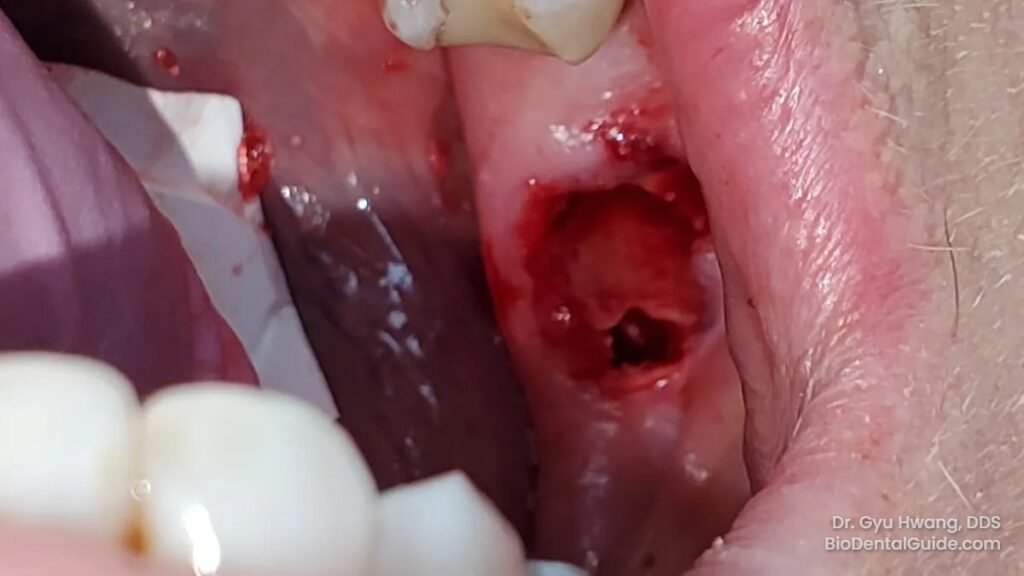
After an infected tooth comes out, inflamed granulation tissue and sometimes remnants of the ligament remain in the socket. Removing infected tissue and irrigating the socket is standard good practice. Some biological protocols go further, mechanically “refreshing” the socket walls to remove all ligament remnants, with the goal of preventing poorly healed areas sometimes called cavitations (see jawbone cavitations). That idea is plausible, but it hasn’t been tested in controlled studies, and overly aggressive removal can damage healthy bone. Thoroughness has to be balanced with preservation.

3. Healing support from your own blood: PRF
Platelet-rich fibrin is made by drawing a small amount of your blood and spinning it in a centrifuge without anticoagulants. The result is a fibrin gel rich in platelets and white blood cells that slowly releases growth factors. It can be shaped into plugs or membranes and placed in the socket. I’m a certified phlebotomist, so I draw the blood sample myself, right in the dental chair, during the same visit.
A 2019 meta-analysis of ten randomized trials of PRF after lower wisdom tooth removal found that it reduced the risk of dry socket (relative risk 0.35) and reduced pain on day three, while swelling and jaw stiffness were not significantly different. The authors rated the evidence as low quality and concluded that PRF reduces some complications but doesn’t prevent them. In my view, PRF is a sensible, low-risk addition, especially for higher-risk extractions, but not a requirement for every tooth.

4. Disinfection aids
Some biological practices irrigate the socket with ozonated water or apply ozonated oil afterward. These are reasonable adjuncts with limited evidence (see ozone therapy in dentistry). Lasers can also be used to decontaminate the socket walls.
5. Ridge preservation when an implant is planned
After extraction, the jaw naturally shrinks in width and height over the following months. Placing a bone graft in the socket, often covered with a membrane or PRF, reduces that shrinkage. A 2019 systematic review found that ridge preservation significantly limited loss of ridge width and height compared with natural healing. If you plan an implant later, ask whether ridge preservation makes sense for your site.
A case from my practice: sticky bone and a PRF membrane
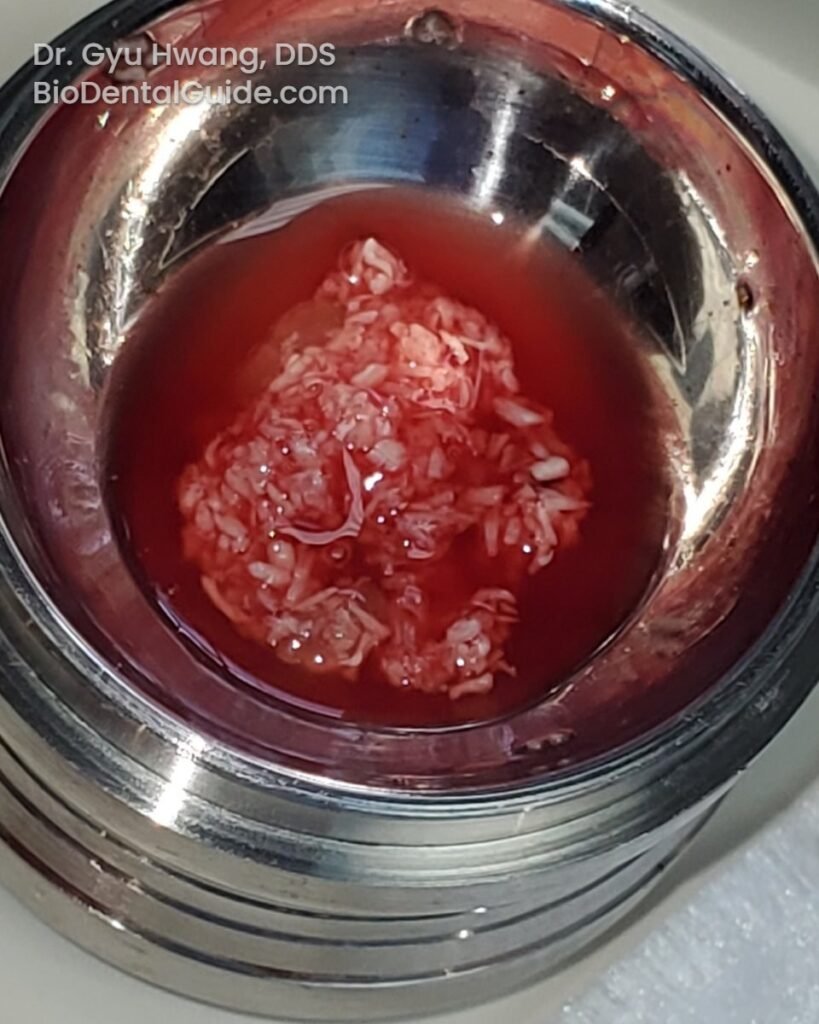
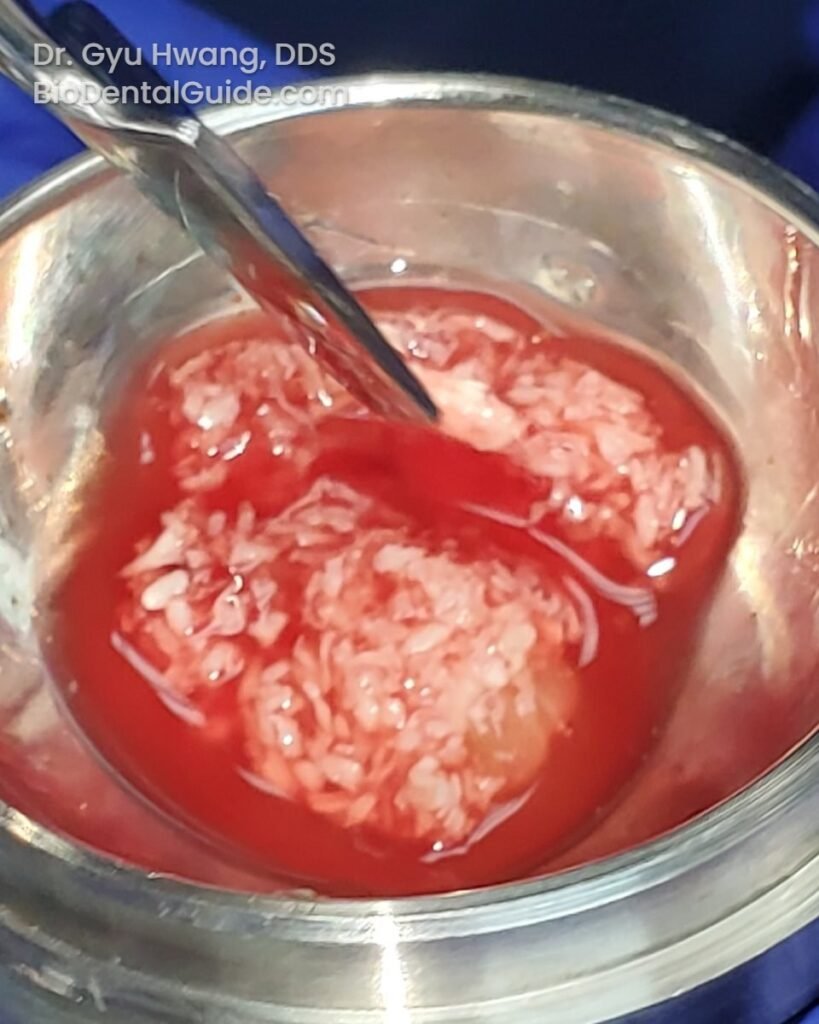
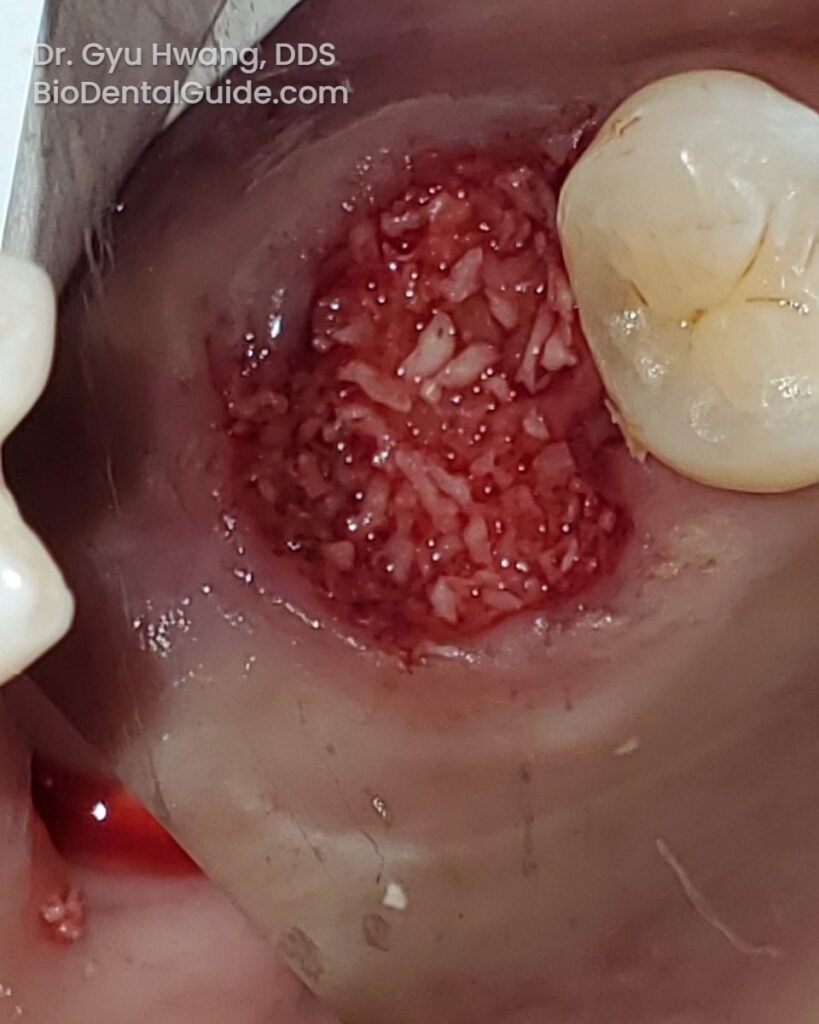
In the case below, I mixed the bone graft particles with liquid PRF from the patient’s own blood. As the fibrin sets, it binds the particles into a single moldable mass known as “sticky bone,” which is easier to pack into the socket and less likely to shift than loose granules. A PRF membrane was then laid over the graft to protect it while the gum heals.



6. Thoughtful anesthesia choices
Most dental anesthetics contain epinephrine, which deepens and prolongs numbness and reduces bleeding. Cartridges with epinephrine also contain sulfite preservatives. Some biological dentists prefer epinephrine-free anesthetics for certain patients, and they’re the right choice for people with sulfite sensitivity. The trade-off is shorter anesthesia and more bleeding, so this is a decision to make with your dentist.
Antibiotics: Not Automatic
A Cochrane review found that preventive antibiotics reduce the risk of infection after wisdom tooth removal by roughly two-thirds and modestly reduce dry socket, but about 19 healthy people need to take antibiotics to prevent one infection, and side effects increase. For healthy patients having straightforward extractions, many surgeons, myself included, prescribe antibiotics selectively rather than routinely. If you do take antibiotics, consider a probiotic and a fiber-rich diet to support your gut microbiome during recovery (see the oral-gut axis).
Aftercare That Protects Healing
The first few days decide most outcomes. The instructions I give, adapted from the surgical guidelines I studied, include:
- Gauze: keep firm pressure on the gauze for 30 to 60 minutes after surgery.
- Cold: use ice packs on and off for the first 24 hours to limit swelling. Moist heat after that can ease soreness.
- Protect the clot: no straws, spitting, or vigorous rinsing for the first 24 hours.
- No smoking or vaping for at least 72 hours, ideally much longer. Smoking is one of the strongest risk factors for dry socket.
- Gentle rinsing: after 24 hours, rinse gently with warm salt water several times a day.
- Irrigation: if you’re given an irrigation syringe for a lower wisdom tooth site, start gently after a few days to flush food out without disturbing the clot.
- Eat well: soft, nutritious foods with protein and vitamin C support repair (see vitamin C and your gums).
- Pain control: ibuprofen combined with acetaminophen works well for most dental pain when it’s safe for you.
Patients sometimes ask about arnica, bromelain, and quercetin for swelling. These are popular in integrative circles, but the evidence is limited, and some can affect bleeding or interact with medications. Tell your surgeon before taking them.
Signs of Dry Socket
Dry socket happens when the clot is lost or breaks down early, exposing bone. It typically causes throbbing pain that worsens two to four days after extraction, often radiating to the ear, sometimes with bad taste or odor. It’s not an infection, and it’s very treatable. Call your dentist, who can clean the socket and place a soothing dressing.
When Can an Implant Go In?
- Immediately, at the same visit, when the bone and gum conditions are favorable and infection can be fully controlled
- Early, after soft tissues heal, usually 6 to 8 weeks
- Delayed, after 3 to 6 months of bone healing, often with ridge preservation at the time of extraction
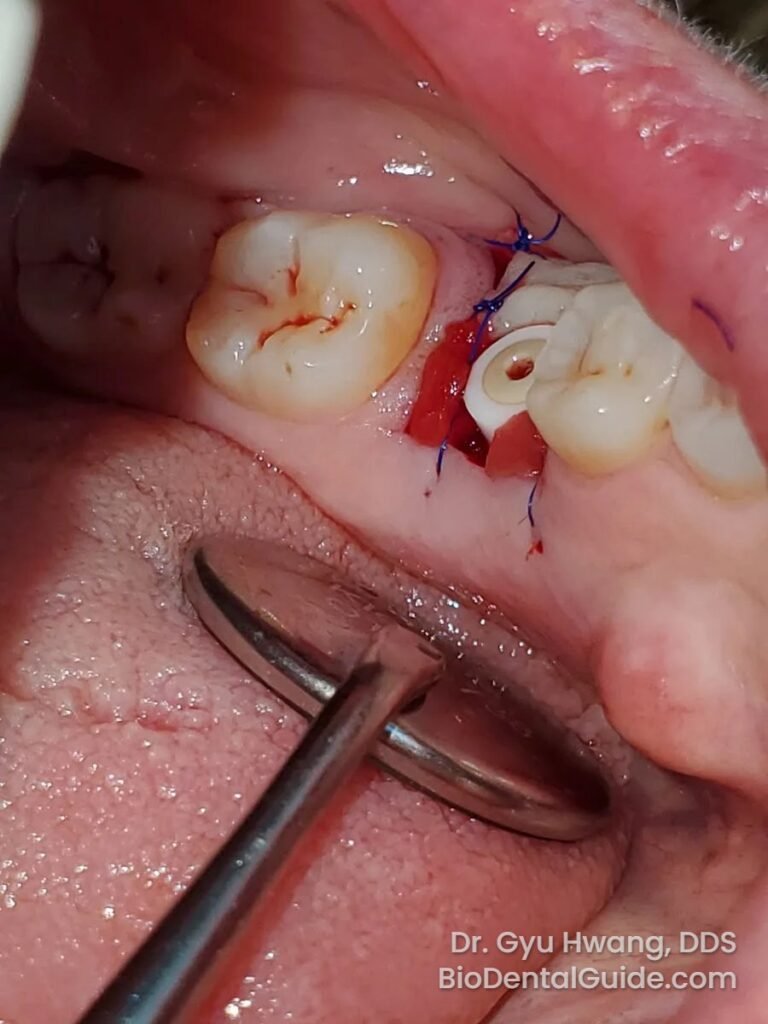
Your surgeon will recommend timing based on the infection, the bone, and the location. If you’re planning an implant, see how to prepare for dental implant surgery.
Frequently Asked Questions
What is a biological tooth extraction?
It’s an extraction focused on healing as much as removal: gentle technique that preserves bone, thorough cleaning of infected tissue from the socket, healing support such as platelet-rich fibrin, and a plan for replacing the tooth. The individual steps are used in many practices; the biological approach combines them deliberately.
What is the Ögram extraction technique?
Ögram is a gentle extraction method from Germany. Special instruments first separate the fibers holding the tooth at the top of the socket, the tooth is loosened with small movements, and after a wait of several minutes it is lifted out with very little force. Small studies found it safe with good healing, but it doesn’t prevent bone shrinkage on its own, so ridge preservation is still used when an implant is planned.
What is PRF, and is it worth it?
PRF, platelet-rich fibrin, is a healing gel made by spinning a small sample of your own blood. After wisdom tooth removal it has been shown to reduce dry socket and early pain, though the evidence is low quality. It’s low-risk and especially worth considering for difficult extractions or people at higher risk of dry socket.
How can I prevent dry socket?
Don’t smoke or vape, avoid straws and spitting for the first day, rinse gently after 24 hours, and follow your aftercare instructions closely. Your surgeon may also use PRF or other measures if you’re at higher risk, such as after a lower wisdom tooth extraction or a previous dry socket.
Do I need antibiotics after a tooth extraction?
Not always. For healthy people having straightforward extractions, antibiotics are often unnecessary. They’re more likely to be recommended for impacted wisdom teeth, spreading infection, or medical conditions that raise infection risk. Your surgeon should explain the reasoning either way.
When can I get an implant after an extraction?
It can be placed the same day in favorable situations, after about 6 to 8 weeks of gum healing, or after 3 to 6 months of bone healing. The timing depends on infection, bone quality, and where the tooth is located.
Bottom Line
A biological tooth extraction treats the extraction site as the foundation for what comes next. Gentle technique, thorough socket cleaning, selective use of PRF, ridge preservation, and attentive aftercare give your bone and gums the best chance to heal well, whether you’re replacing the tooth with an implant or simply want the healthiest possible recovery.
References
- Xiang X, et al. Impact of platelet-rich fibrin on mandibular third molar surgery recovery: a systematic review and meta-analysis. BMC Oral Health. 2019;19.
- Avila-Ortiz G, Chambrone L, Vignoletti F. Effect of alveolar ridge preservation interventions following tooth extraction: a systematic review and meta-analysis. Journal of Clinical Periodontology. 2019;46(Suppl 21):195-223.
- Lodi G, et al. Antibiotics to prevent complications following tooth extractions. Cochrane Database of Systematic Reviews. 2021;(2):CD003811.
- Miron RJ, et al. Use of platelet-rich fibrin in regenerative dentistry: a systematic review. Clinical Oral Investigations. 2017;21(6):1913-1927.
- Strietzel FP, Philipp G. Das ÖGRAM-System: ein Beitrag zur Minimierung des Traumas bei Zahnextraktionen [The ÖGRAM system: a contribution to minimizing trauma in tooth extractions]. Quintessenz Zahnmedizin. 1996;(5):693.
- Berthold J. Veränderung der Kieferkammbreite nach Zahnentfernung mit konventioneller und Ögram-Extraktionstechnik [Change in ridge width after tooth extraction with conventional and Ögram technique]. Quintessenz Zahnmedizin. 2008;(8):777-784.
About the Author

Dr. Gyu Hwang, DDS, practices at Evergreen Dental Wellness in Annandale, Virginia. He has treated patients since 2004, beginning with his clinical training at the University of Michigan School of Dentistry (DDS, 2006), and is a certified phlebotomist. His postgraduate training includes the Pankey Institute, the Dawson Academy, the Kois Center, and biological and integrative dentistry through the American College of Integrative Medicine and Dentistry (ACIMD). His practice focuses on biological dentistry, implants, laser dentistry, and sleep appliances. Read more about Dr. Hwang.
This article is for education and does not replace an in-person surgical consultation.