
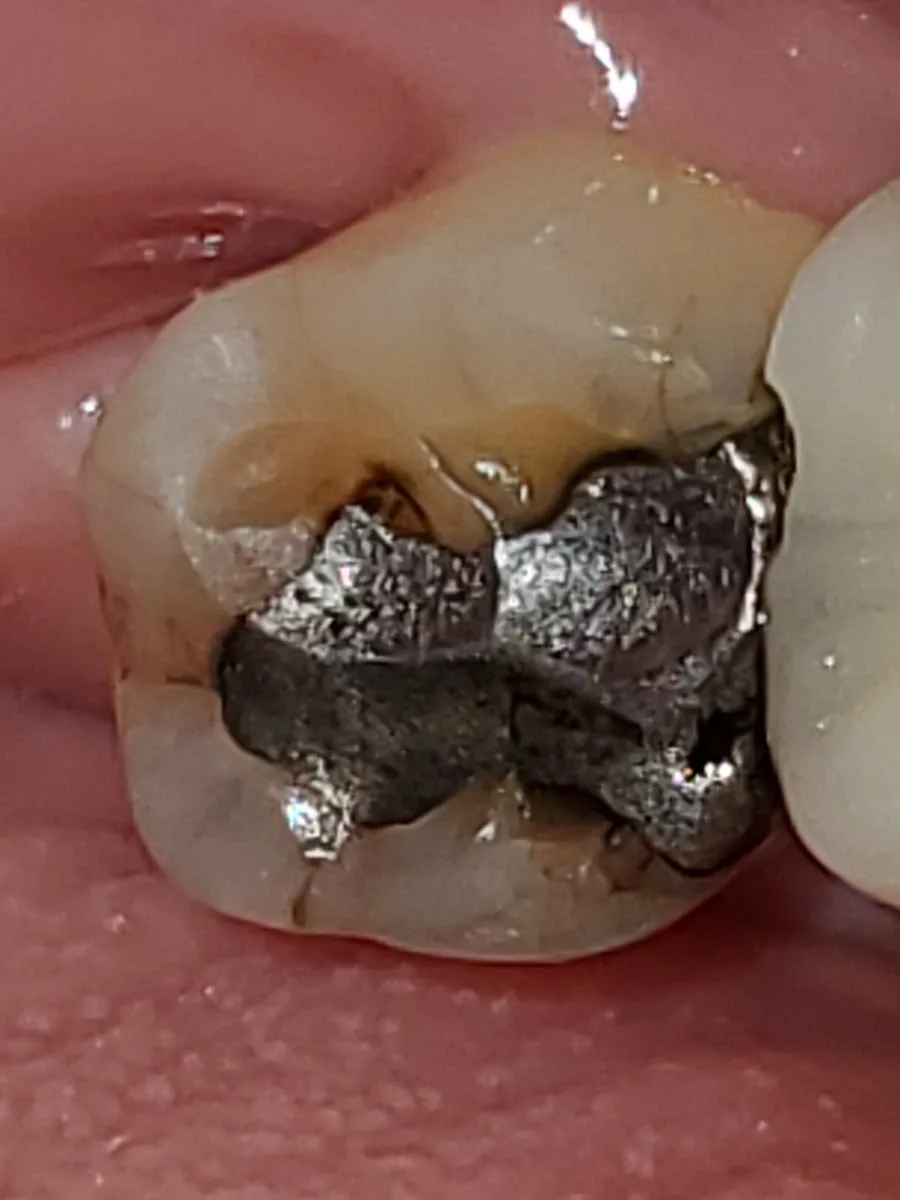
“Should I remove amalgam fillings?” is one of the most common questions I’m asked, and it deserves a better answer than either “they’re perfectly safe” or “get them all out now.” The regulatory landscape has shifted a great deal in the past few years, the science has real nuance, and the right choice depends on your specific teeth and health.
Mercury and dental materials were major themes of my integrative training through the American College of Integrative Medicine and Dentistry (ACIMD). Here’s the framework I use with patients.
Key takeaways
- Amalgam is being phased out: the European Union banned most uses in January 2025, and in November 2025 parties to the Minamata Convention agreed to end its use worldwide by 2034.
- The FDA advises high-risk groups to avoid new amalgam fillings when possible, but it does not recommend removing fillings in good condition unless medically necessary, because removal temporarily increases exposure.
- Good reasons to replace an amalgam include decay, cracks, failing margins, lesions in the gum or cheek touching the filling, and documented allergy.
- If you do remove amalgam, it should be done with protective measures such as the SMART protocol.
Where Things Stand Now
In the United States, the FDA issued updated recommendations in September 2020. It advised that certain groups avoid getting amalgam fillings “whenever possible and appropriate”: pregnant women, women planning pregnancy, nursing mothers and their infants, children (especially under 6), people with pre-existing neurological diseases such as multiple sclerosis, Alzheimer’s, or Parkinson’s, people with impaired kidney function, and people with known sensitivity to mercury or other amalgam components. In the same communication, the FDA said it does not recommend removing or replacing amalgam fillings in good condition unless medically necessary.
In Europe, Regulation (EU) 2024/1849 prohibited the use of dental amalgam from January 1, 2025, with narrow exceptions where a dentist judges it strictly necessary for a patient’s specific medical needs.
Globally, at the sixth Conference of the Parties to the Minamata Convention on Mercury in November 2025, countries adopted amendments establishing a global phase-out of dental amalgam by 2034.
These decisions are driven by mercury’s toxicity, its environmental impact, and the availability of good alternatives. They don’t mean that every existing filling is an emergency.
What the Science Says About Existing Fillings
Amalgam releases low levels of mercury vapor continuously, and more with chewing, grinding, and hot liquids. People with more amalgam surfaces tend to have higher mercury levels in their urine. That part is not controversial.

What’s debated is how much that exposure matters for health in most people. Two large randomized trials in children, published together in JAMA in 2006, compared amalgam with mercury-free fillings over five to seven years and did not find measurable differences in neuropsychological or kidney outcomes. On the other hand, those trials studied healthy children, not adults with decades of exposure, people with impaired kidney function, or people who may be more susceptible. That gap is exactly why the FDA singled out high-risk groups.
Some people report feeling better after amalgam removal. A Norwegian study found that patients who attributed their health complaints to amalgam reported fewer complaints after replacement than comparison groups did. Because patients knew their fillings were removed, expectation may play a role, so I don’t promise symptom relief. I do take patients’ concerns seriously.
Good Reasons to Replace an Amalgam Filling
These are the situations where I’m most comfortable recommending replacement:

- Recurrent decay under or around the filling
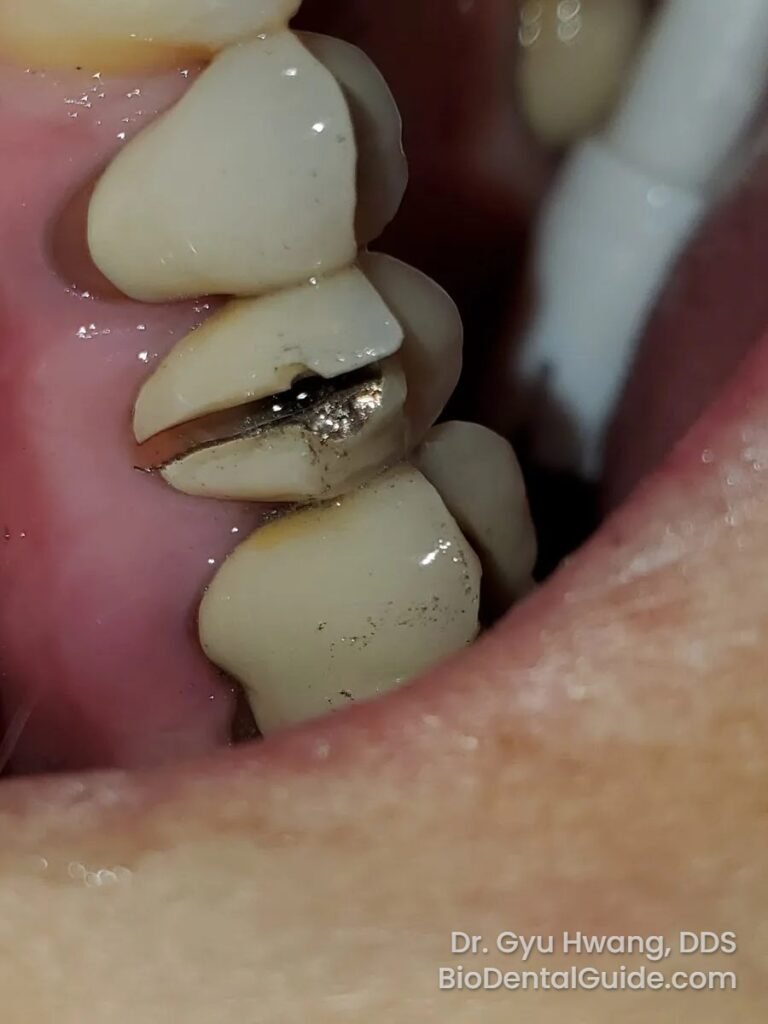
- Cracks in the tooth. Large amalgams can act like a wedge as teeth flex, and cracked cusps are a common reason old amalgam teeth break.
- Failing margins, chips, or a broken filling
- Oral lichenoid lesions: white, lacy, or red patches on the cheek or tongue that touch an amalgam. A 2026 meta-analysis found that replacing amalgam was strongly associated with lesions resolving, especially when the lesion was in direct contact with the filling or patch testing was positive (see oral lichen planus).
- Documented allergy to mercury or other amalgam components
- You’re in a high-risk group and the filling needs work anyway
- An informed personal preference after discussing the benefits, costs, and the temporary exposure of removal

Reasons to Wait or Leave a Filling Alone
- Pregnancy or breastfeeding. Elective removal is generally postponed.
- A sound filling in a tooth that would be weakened by removal. Sometimes removing a very large amalgam means the tooth needs a crown, or even a root canal if the decay or drilling is close to the nerve. That trade-off deserves careful thought.
- You can’t access proper protective technique. Removal without precautions exposes you to more mercury than leaving a stable filling in place.
Should I Remove Amalgam Fillings? A Simple Framework
| Situation | My usual recommendation |
|---|---|
| Filling is intact, no decay, you feel well, not high-risk | Monitor; replace when it needs work or if you choose to after an informed discussion |
| Filling has decay, cracks, or is breaking | Replace with protective technique |
| Lesion in the cheek or tongue touching the filling | Replace, ideally after documenting the lesion; consider patch testing |
| High-risk group, filling needs work | Replace with a mercury-free material, timed appropriately |
| Pregnant or breastfeeding | Postpone elective removal unless there’s a clinical problem |
| Many fillings, strong preference to remove | Plan a staged, protected sequence starting with the most compromised teeth |

If You Decide to Remove Them
Two things matter most. First, the removal technique: a dental dam, a separate air supply for you, powerful suction at the mouth, and removing the filling in chunks. I explain each step in safe amalgam removal: what the SMART protocol involves. Second, the replacement material. Composite resins, ceramics, and glass ionomers each have strengths, and some patients benefit from testing before choosing (see dental material biocompatibility testing).
I usually start with the teeth that most need treatment, work in stages, and space appointments so you’re not overwhelmed. There’s no benefit to rushing a mouthful of stable fillings out in a single day.
Frequently Asked Questions
Is it safe to leave amalgam fillings in?
For most people with intact amalgam fillings, the FDA does not recommend removal unless it’s medically necessary, because removal temporarily increases mercury exposure. People in high-risk groups, or with fillings that are failing, should discuss replacement with their dentist.
Does removing amalgam fillings release mercury?
Yes. Drilling creates mercury vapor and fine particles. That’s why protective techniques such as a dental dam, a separate air supply for the patient, extraoral suction, and sectioning the filling are important whenever amalgam is removed.
Can amalgam fillings cause health problems?
Amalgam releases low levels of mercury vapor, and some people are more susceptible than others, which is why regulators have restricted its use. Large trials in healthy children didn’t find measurable harm over several years. Lesions in the mouth that touch amalgam and true allergies are well-documented local problems.
How do I know if my amalgam filling is failing?
Signs include sensitivity or pain when biting, a dark shadow spreading around the filling, a visible crack, a rough or broken edge, or decay seen on X-rays. A careful exam with magnification and X-rays is the best way to judge each filling.
What should replace my amalgam fillings?
Common options are composite resin for small and medium fillings, ceramic inlays, onlays, or crowns for larger restorations, and glass ionomer in certain situations. The best choice depends on the size of the filling, the forces on the tooth, and any material sensitivities you have.
Bottom Line
The world is moving away from amalgam, and for good reasons. That doesn’t make every silver filling dangerous, and removal isn’t risk-free. Replace amalgam when a tooth needs it, when it’s affecting the surrounding tissues, when you’re in a high-risk group, or when you’ve made an informed choice to do so, and always with proper protection.
References
- U.S. Food and Drug Administration. Recommendations about the use of dental amalgam in certain high-risk groups. September 2020. Summary: DrBicuspid.
- Regulation (EU) 2024/1849 of the European Parliament and of the Council amending Regulation (EU) 2017/852 on mercury. Official Journal of the European Union. 2024.
- UN Environment Programme. Minamata Convention COP-6 agrees to end use of dental amalgam by 2034. November 2025.
- Bellinger DC, et al. Neuropsychological and renal effects of dental amalgam in children: a randomized clinical trial. JAMA. 2006;295(15):1775-1783.
- DeRouen TA, et al. Neurobehavioral effects of dental amalgam in children: a randomized clinical trial. JAMA. 2006;295(15):1784-1792.
- Sjursen TT, et al. Changes in health complaints after removal of amalgam fillings. Journal of Oral Rehabilitation. 2011;38(11):835-848.
- Kothari H, et al. Clinical resolution of oral lichenoid lesions after amalgam replacement: a systematic review and meta-analysis of observational studies. Journal of Oral Biology and Craniofacial Research. 2026;16(2):101404.
About the Author

Dr. Gyu Hwang, DDS, practices at Evergreen Dental Wellness in Annandale, Virginia. He has treated patients since 2004, beginning with his clinical training at the University of Michigan School of Dentistry (DDS, 2006). His postgraduate training includes the Pankey Institute, the Dawson Academy, the Kois Center, and biological and integrative dentistry through the American College of Integrative Medicine and Dentistry (ACIMD). His practice focuses on biological dentistry, implants, laser dentistry, and sleep appliances. Read more about Dr. Hwang.
This article is for education and does not replace an in-person dental evaluation.