
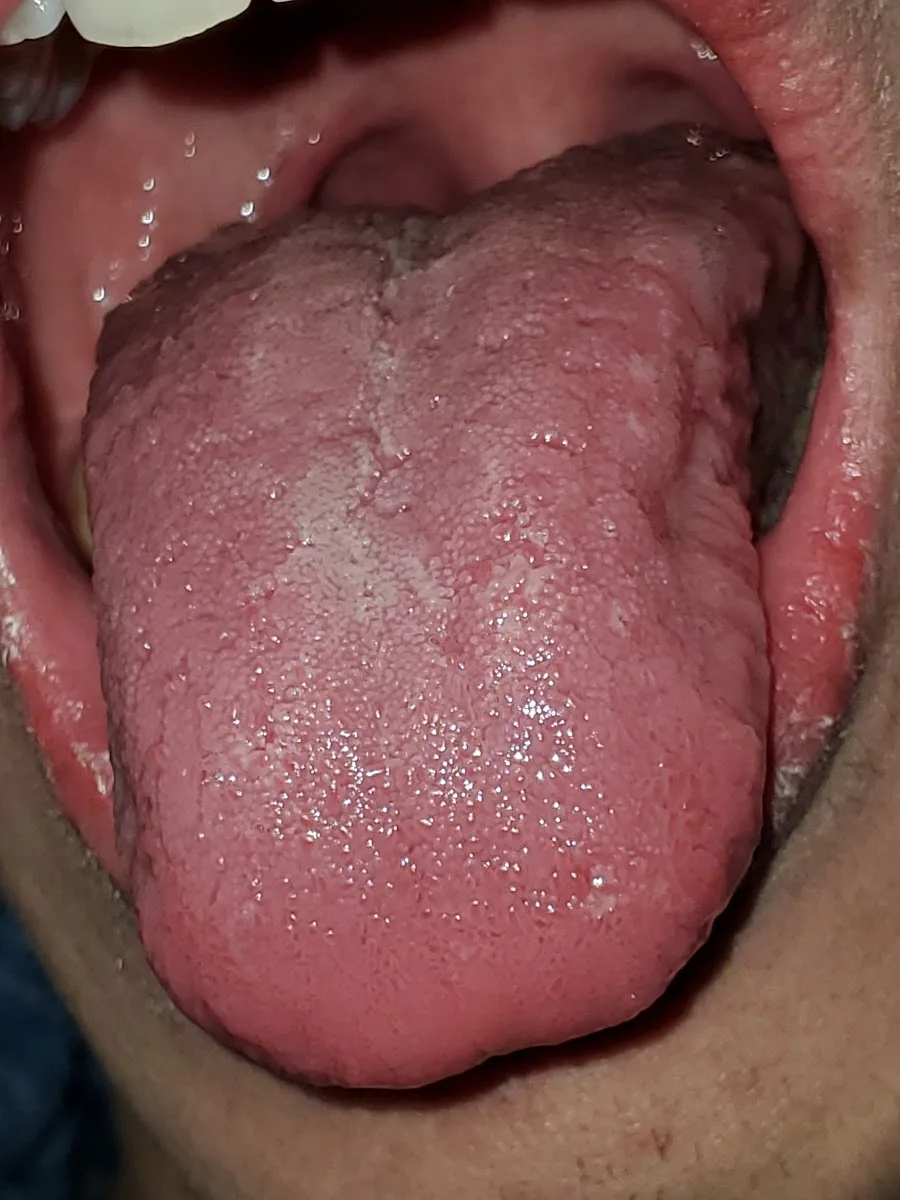
The lining of your mouth is one of the fastest-renewing tissues in your body. Cells on your tongue, cheeks, and gums turn over in a matter of days to weeks, which means they need a steady supply of vitamins and minerals to rebuild. When that supply runs short, the mouth often shows it early. Learning to recognize mouth signs of vitamin deficiency is one of the most practical skills a dentist can bring to whole-body health.
A structured “functional” mouth exam, taught through the Institute for Functional Medicine’s eight-step approach, was a highlight of my integrative training through the American College of Integrative Medicine and Dentistry (ACIMD). It systematically checks the jaw joints, lips, palate, tongue, gums, cheeks, teeth, and chewing and swallowing for clues to nutrition and systemic health. Here are the findings I pay the most attention to.
Key takeaways
- A smooth, red, sore tongue can signal low vitamin B12, folate, or iron.
- Cracks at the corners of the mouth are often linked to iron or B vitamins, but yeast infections and ill-fitting dentures are common causes too.
- Gums that bleed easily, even with good brushing, can reflect low vitamin C.
- Signs are clues, not diagnoses. A blood test confirms a deficiency before you start supplements.
Why the Mouth Is an Early Warning System
Rapidly dividing cells depend on nutrients involved in DNA synthesis and energy production, especially vitamin B12, folate, iron, riboflavin, niacin, and zinc. When these run low, the tongue’s papillae (the tiny bumps that give it texture) can shrink, the tissue can become thin and red, and healing slows. Because your dentist looks closely at these tissues at every visit, the dental chair is a good place to catch changes early.

Mouth Signs of Vitamin Deficiency: What They May Mean and What to Ask For
| What you see or feel | Possible nutrient links | Other common causes | Tests to discuss with your doctor |
|---|---|---|---|
| Smooth, red, shiny, or sore tongue (atrophic glossitis) | Vitamin B12, folate, iron, riboflavin | Yeast infection, dry mouth, irritation | CBC, ferritin, vitamin B12 (sometimes methylmalonic acid), folate |
| Cracks or sores at the corners of the mouth (angular cheilitis) | Iron, riboflavin, B6, B12, folate, zinc | Yeast or bacterial infection, drooling, deep folds, dentures | CBC, ferritin, B vitamins as indicated; treatment of infection |
| Gums that bleed easily despite good brushing | Vitamin C | Plaque and gum disease (most common), blood thinners | Dental exam first; diet review; vitamin C status if intake is low |
| Recurrent canker sores | Iron, B12, folate (in some people); celiac disease | Stress, injury, SLS toothpaste, family tendency | CBC, ferritin, B12, folate; celiac screening if other symptoms |
| Burning tongue or mouth | B12, iron, zinc, B vitamins | Dry mouth, yeast, diabetes, reflux, medications, burning mouth syndrome | CBC, ferritin, B12, zinc, glucose or HbA1c, thyroid |
| Pale lips, gums, or inner cheeks | Iron deficiency or other anemia | Low blood flow, smoking | CBC, ferritin |
| Changes in taste | Zinc | Medications, infections, nasal problems | Medication review; zinc if suspected |
| Scalloped tongue edges | Not usually nutritional | Tongue enlargement, clenching, sleep-disordered breathing, hypothyroidism | Sleep and airway evaluation; thyroid if other symptoms |
A few notes on these:
Vitamin B12. Deficiency can develop slowly and quietly. People at higher risk include adults over 50, vegans and strict vegetarians, people with pernicious anemia or past stomach or bowel surgery, and people who take metformin or long-term acid-reducing medications. A sore, smooth tongue sometimes appears before the classic signs of anemia or the nerve symptoms, like tingling feet, that B12 deficiency can cause.
Iron. Iron deficiency is common in people who menstruate heavily, during pregnancy, and with hidden blood loss from the digestive tract. A pale, smooth tongue and cracked lip corners are classic signs. Iron deficiency without an obvious explanation deserves a medical evaluation, not just supplements.
Vitamin C. Most bleeding gums are caused by plaque and gum inflammation. But a 2021 analysis of clinical trials and national survey data found that a tendency for gums to bleed was associated with low vitamin C levels and improved when intake was increased. I cover this in vitamin C and your gums.

Canker sores and celiac disease. Recurrent mouth ulcers can occur with celiac disease, sometimes alongside enamel defects, digestive symptoms, or iron deficiency. If you have frequent canker sores plus other symptoms, ask your doctor about celiac screening before cutting out gluten, since going gluten-free first can make testing less accurate.
Burning mouth. A burning sensation with a normal-looking mouth can come from nutrient deficiencies, but it can also be burning mouth syndrome, a nerve-related pain condition. See burning mouth syndrome: causes and treatments.
What Your Gums, Lips, and Teeth Add to the Picture
Beyond the tongue, a functional mouth exam also looks for:

- Dry mouth and thick saliva, which may point to medications, dehydration, mouth breathing, or conditions like Sjögren’s syndrome
- Enamel erosion, a smooth, cupped wearing of the teeth that can reflect acid reflux or frequent acidic drinks
- Signs of clenching and grinding, which often travel with stress and sleep-disordered breathing
- Lip and tongue posture, which can reveal mouth breathing and airway issues
Test Before You Supplement
It’s tempting to see a sign and reach for a supplement. I’d encourage you to test first, for three reasons:
- Several deficiencies look alike. A sore, smooth tongue could reflect low B12, folate, or iron, and the treatment differs.
- Some supplements can mask others. High-dose folic acid can correct anemia from B12 deficiency while the nerve damage continues.
- The cause matters. Iron deficiency may be the first clue to blood loss that needs medical attention, and B12 deficiency may reflect an absorption problem that pills alone won’t fix.
Your dentist can point out what they see; your physician can order and interpret the blood work. Ideally, they talk to each other.
Supporting a Healthy Mouth With Food
For most people, a varied diet covers these nutrients well: leafy greens and legumes for folate, animal foods or fortified foods for B12, red meat, legumes, and leafy greens for iron (with vitamin C to help absorption), dairy, eggs, and almonds for riboflavin, and shellfish, meat, seeds, and nuts for zinc. People with restricted diets, absorption problems, or higher needs may need targeted supplements based on testing.
Frequently Asked Questions
What does a vitamin B12 deficiency tongue look like?
It often looks smooth, red, and shiny because the small bumps on the tongue’s surface (papillae) shrink. It may feel sore or burn, especially with hot or spicy foods. A blood test is needed to confirm B12 deficiency, because low iron or folate can look similar.
What vitamin deficiency causes cracks in the corners of the mouth?
Cracks at the corners of the mouth, called angular cheilitis, are linked to low iron, riboflavin, vitamin B6, B12, folate, and zinc. They’re also commonly caused by yeast or bacterial infection, drooling, deep skin folds, or loose dentures, so treating the infection is often part of the solution.
Can low iron cause mouth ulcers?
Iron deficiency, along with low vitamin B12 or folate, is found more often in people with recurrent canker sores, and correcting a true deficiency may help. Many people with canker sores have normal levels, though, and other triggers like stress and minor injuries are common.
Can vitamin deficiencies cause a burning tongue?
Yes. Low vitamin B12, iron, zinc, and some other B vitamins can cause burning or soreness. Dry mouth, yeast infections, diabetes, reflux, and medications can too. If no cause is found, burning mouth syndrome may be the diagnosis.
Should I take a multivitamin if my tongue looks smooth?
It’s better to get tested first. A smooth tongue can reflect several different deficiencies with different causes, and some, like B12 deficiency from poor absorption, need specific treatment. Once you know what’s low and why, supplementation can be targeted.
Bottom Line
Your mouth is a window into your nutrition. A smooth, sore tongue, cracked lip corners, bleeding gums, and recurrent ulcers can all be early clues to deficiencies in B12, iron, folate, vitamin C, or zinc, though each has other possible causes. Mention these signs to your dentist and physician, get the right tests, and treat the cause rather than guessing.
References
- Pontes HAR, et al. Oral manifestations of vitamin B12 deficiency: a case report. Journal of the Canadian Dental Association. 2009;75(7):533-537.
- Federico JR, Basehore BM, Zito PM. Angular cheilitis. StatPearls. Treasure Island (FL): StatPearls Publishing.
- Hujoel PP, et al. Bleeding tendency and ascorbic acid requirements: systematic review and meta-analysis of clinical trials. Nutrition Reviews. 2021.
- National Institutes of Health, Office of Dietary Supplements. Vitamin B12 fact sheet for health professionals.
- Institute for Functional Medicine. Functional Nutrition Evaluation: Dental Exam Companion Guide. 2015.
About the Author

Dr. Gyu Hwang, DDS, practices at Evergreen Dental Wellness in Annandale, Virginia. He has treated patients since 2004, beginning with his clinical training at the University of Michigan School of Dentistry (DDS, 2006). His postgraduate training includes the Pankey Institute, the Dawson Academy, the Kois Center, and biological and integrative dentistry through the American College of Integrative Medicine and Dentistry (ACIMD). His practice focuses on biological dentistry, implants, laser dentistry, and sleep appliances. Read more about Dr. Hwang.
This article is for education and does not replace evaluation by your dentist or physician.