Patients who look for a biological or holistic dentist often ask the same question: “Do you use lasers?” The honest answer is yes, for specific jobs. A dental laser is not a magic wand, and it does not replace every drill or scalpel. Used for the right problem, though, it can mean less tissue removed, less bleeding, fewer sutures, and often less need for anesthetic or antibiotics. Those goals line up closely with what biological dentistry is about.
In this guide to holistic laser dentistry, I explain how dental lasers work, where they help most, what the research actually supports, and what to ask before you book treatment.
Why holistic lasers fit a biological approach
Biological dentistry aims to treat the mouth as part of the whole body. That means removing as little healthy tissue as possible, reducing the chemical and surgical burden of treatment, and supporting the body’s own healing. Lasers serve those aims in three ways:
- Selective tissue removal. Each laser wavelength is absorbed by a specific target, such as water, pigment, or hemoglobin. That lets the clinician remove diseased tissue while leaving more healthy tissue intact.
- Bacterial reduction. Laser energy reduces bacteria in gum pockets and on tissue surfaces, which can lessen reliance on systemic antibiotics in some cases.
- Gentler healing. Laser-treated soft tissue often bleeds less and heals without sutures. Many patients report less post-operative discomfort.
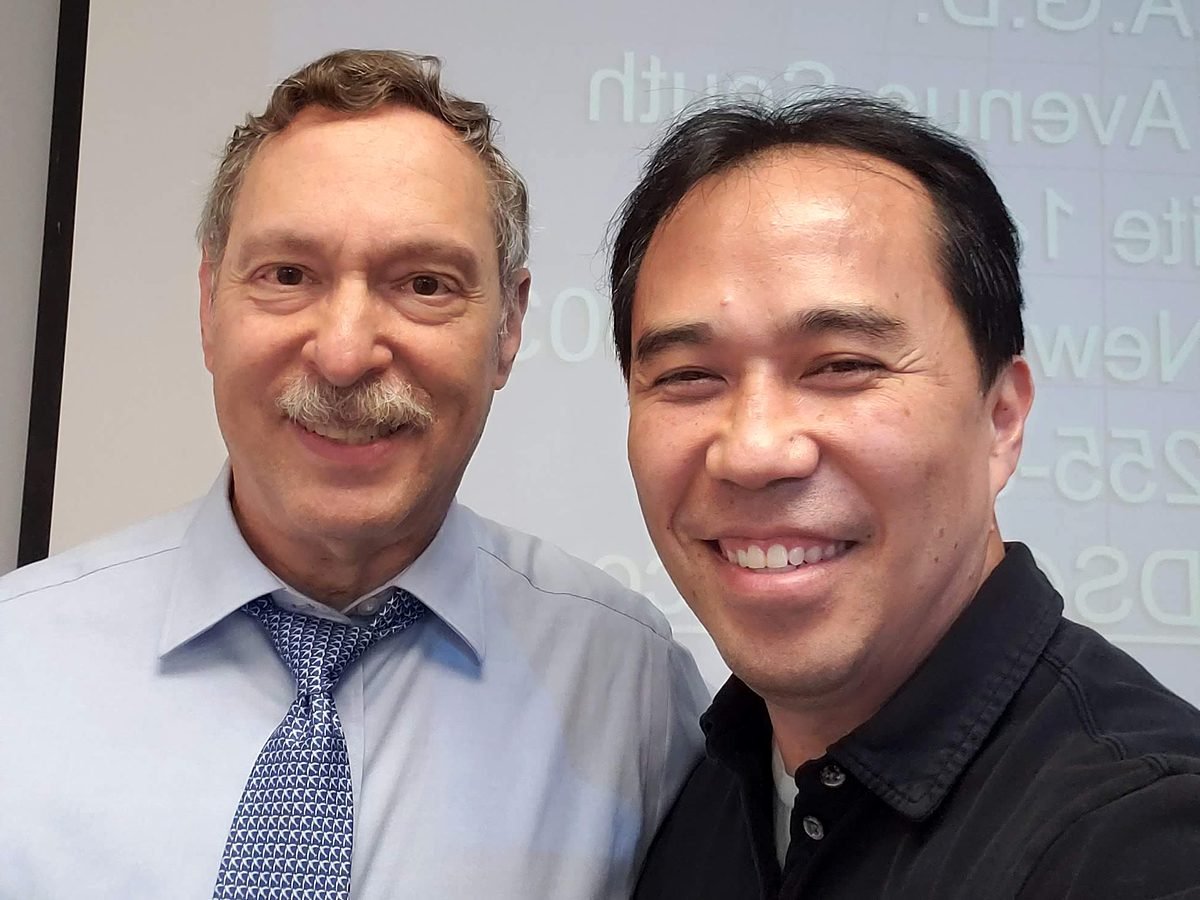
I started using lasers for a simple reason: I know how much patients fear the dental drill, and the noise as much as the feeling. I kept asking whether new technology could replace it. I first saw a dental laser at the Chicago Midwinter Meeting in 2006. The unit made a louder popping sound than I expected, and I was not convinced it could cut tooth efficiently, so I did not bring it into my practice right away. Later, as I treated more gum disease and airway cases, I needed a fast, clean way to incise soft tissue, and I began using a CO2 laser following the approach of Dr. Robert A. Convissar, a pioneer of laser dentistry and the author of Principles and Practice of Laser Dentistry, a leading textbook on the subject now in its third edition. Dr. Win Nguyen, an endodontist and World Clinical Laser Institute Master who teaches laser courses to dentists across the country, then introduced me to erbium lasers, and I have kept studying and refining laser techniques ever since. Today my office runs two Waterlase Er,Cr:YSGG lasers for hard and soft tissue, a 940 nm diode laser, and a 640 nm red-light laser for photobiomodulation, and we are still expanding our laser equipment following the latest technology.


The main types of dental lasers
Not all dental lasers are the same. The wavelength decides what the laser can safely do.
| Laser type | Wavelength | Absorbed mainly by | Typical uses |
|---|---|---|---|
| Er:YAG | 2,940 nm | Water | Cavity preparation, bone, gum and implant surface decontamination |
| Er,Cr:YSGG | 2,780 nm | Water | Cavity preparation, soft and hard tissue procedures |
| Nd:YAG | 1,064 nm | Pigment and hemoglobin | LANAP gum therapy, peri-implantitis (LAPIP), soft tissue |
| Diode | 810–980 nm | Pigment and hemoglobin | Soft tissue trimming, pocket disinfection, photobiomodulation |
| CO2 | 10,600 nm | Water | Soft tissue surgery, frenectomy |


Erbium lasers (the first two rows) can cut tooth structure because enamel and dentin contain water. Nd:YAG and diode lasers cannot prepare teeth; they work on soft tissue and bacteria.
What lasers are used for in a holistic practice
1. Gum disease (periodontitis). This is where lasers get the most attention. The best-known protocol is LANAP (Laser-Assisted New Attachment Procedure), which uses a pulsed Nd:YAG laser to remove infected pocket lining and bacteria, then seal the pocket with a stable blood clot. No flap is cut and no sutures are placed. In 2016 the FDA granted the PerioLase MVP-7 a 510(k) clearance for true periodontal regeneration — new cementum, ligament, and bone on a previously diseased root — when used in the LANAP protocol. I will cover the procedure step by step in a separate LANAP guide.
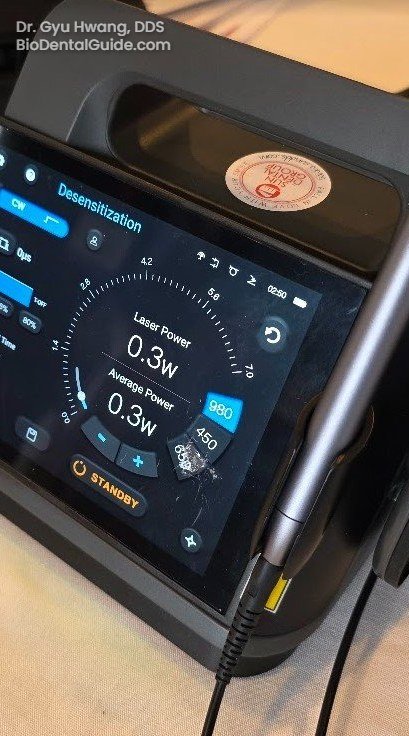
2. Decay removal, disinfection, and desensitizing before the final restoration. Erbium lasers can remove decay and shape a small cavity with little vibration or noise. Before the final filling or crown goes in, the laser can also disinfect the prepared surface and seal exposed dentin tubules to reduce sensitivity. Many patients need less anesthetic.


In my office: an erbium laser disinfects and desensitizes the prepared tooth under rubber dam isolation before the final restoration.3. Peri-implantitis. Infection around an implant is hard to clean with metal instruments. Erbium and Nd:YAG lasers can decontaminate the implant surface with less damage than scraping. This matters to patients who chose zirconia or titanium implants and want to keep them.
4. Gingivectomy, frenectomy, and soft tissue reshaping. Tongue-tie and lip-tie releases, gum contouring, and removal of small lesions are routine laser procedures. Healing is usually quick and sutures are rarely needed.
5. Photobiomodulation (low-level laser therapy). At low power, some lasers are used to support healing after surgery, reduce inflammation, and ease jaw muscle pain. Research is active, and protocols vary widely between offices.
6. Cold sores and canker sores. A short laser session can shorten healing time and relieve pain.
Pairing lasers with bacterial testing
A laser reduces bacteria, but it does not tell you which bacteria were there or whether they came back. In my practice I use phase-contrast microscopy to look at a live plaque sample before gum treatment and again at follow-up visits. Seeing motile bacteria and spirochetes on screen helps patients understand their infection. It also lets us check that treatment worked, instead of relying on pocket depths alone.
What the evidence really says
A trustworthy biological dentist should tell you both sides. In 2018 the American Academy of Periodontology (AAP) published a best-evidence consensus on lasers. It found that lasers used alongside conventional deep cleaning may add a modest benefit, generally under 1 mm in pocket reduction. It also concluded that evidence was not strong enough to call laser therapy alone superior to conventional treatment.
That does not make lasers useless. It means results depend heavily on the laser type, the protocol, and the clinician’s training. LANAP, for example, is a specific protocol with its own device and training, and its FDA clearance rests on human histology studies. A generic diode laser waved through a pocket is not the same treatment.
Limits and safety
- Lasers do not remove amalgam fillings. Safe removal of mercury fillings follows the SMART protocol with isolation and suction, not a laser.
- Lasers cannot remove crowns or prepare teeth for most crowns. Large restorations still need conventional instruments.
- Laser cavity preparation is slower than a high-speed handpiece, and it is not ideal for every tooth or location.
- Eye protection is required for you and the team, and the laser plume must be evacuated.
- Training matters more than the device. Ask what training the dentist completed and how many cases they have treated.
What laser treatment costs
Fees vary by region, laser type, and the extent of disease. For LANAP, published U.S. estimates commonly run about $1,000 to $4,000 per quadrant, with full-mouth treatment often several thousand dollars more. Simple soft tissue procedures cost far less. In a fee-for-service practice like mine, you receive a written fee estimate before treatment and can file the claim with your insurer yourself; coverage depends on your plan and how the procedure is coded.
Questions to ask before laser treatment
- Which laser do you use, and what wavelength is it?
- Is this procedure cleared by the FDA for my condition?
- What training or certification do you have for this protocol?
- How will we measure whether the treatment worked?
- What is the alternative if I choose not to use a laser?
The bottom line
Lasers are one of the most useful tools in minimally invasive, biological dentistry. They can treat gum disease with less cutting, decontaminate implants, and make some fillings more comfortable. They are not a cure-all, and the device matters less than the diagnosis and the skill of the person using it. Ask questions, ask for measurements, and choose a dentist who explains both the benefits and the limits.
Related reading: What Is a Biological Dentist? A Practicing Dentist Explains
References
- FDA 510(k) clearance for LANAP true regeneration (2016)
- AAP Best Evidence Consensus on Lasers (2018)
- Laser analgesia in restorative dentistry: a systematic review (Dentistry Journal, 2020)
- LANAP cost overview (NewMouth)
Is laser dentistry safe?
Yes, when performed by a trained dentist with proper eye protection and plume evacuation. Dental lasers are FDA-cleared medical devices, and each wavelength is cleared for specific uses.
Does laser dentistry hurt?
Many patients feel less discomfort than with a drill or scalpel, and some procedures need little or no anesthetic. Comfort varies by procedure and by person, so your dentist should still offer anesthetic when needed.
Is Laser assisted periodontal treatment better than traditional gum surgery?
Laser assisted periodontal treatment avoids cutting and suturing the gums. Broader reviews show lasers add a modest benefit over conventional therapy, so results depend on the protocol and the clinician.
Can a laser remove mercury fillings?
No. Amalgam fillings should be removed with conventional instruments under the SMART protocol, using isolation and high-volume suction to limit mercury exposure.
Is laser dentistry covered by insurance?
Coverage depends on your plan and how the procedure is coded, not on whether a laser is used. In fee-for-service practices you pay the office directly and can submit the claim to your insurer for reimbursement.
About the Author

Dr. Gyu Hwang, DDS, practices at Evergreen Dental Wellness in Annandale, Virginia. He has treated patients since 2004, beginning with his clinical training at the University of Michigan School of Dentistry (DDS, 2006). His postgraduate training includes the Pankey Institute, the Dawson Academy, the Kois Center, and biological and integrative dentistry through the American College of Integrative Medicine and Dentistry (ACIMD). His practice focuses on biological dentistry, implants, laser dentistry, and sleep appliances. Read more about Dr. Hwang.